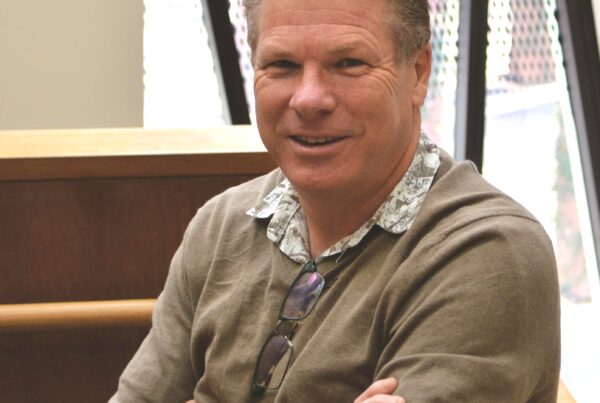

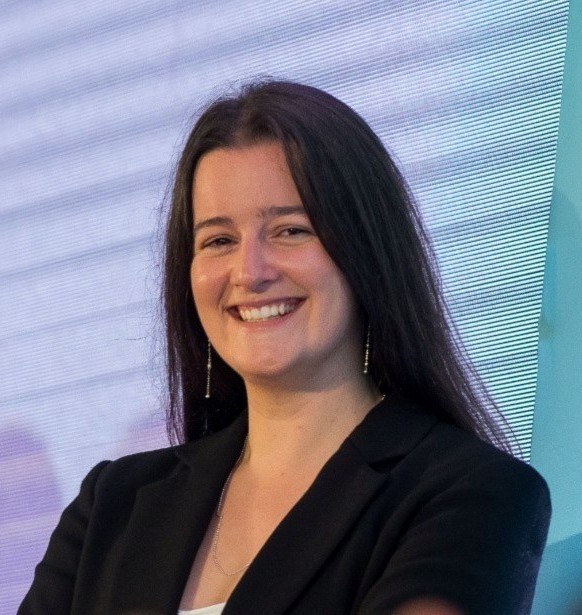
Inês , a medical oncology registrar from Portugal, has recently spent two months observing at Hospice West Auckland to learn more about palliative care on the other side of the world. With no formal exchange programme in place, simply reached out, and was delighted to be welcomed at Hospice. “I just sent some emails and hoped that people answered me, and it led to really wonderful things,” she smiles.
Now, after time spent both at Hospice West Auckland and with hospices and hospital teams across Auckland, Inês is returning home with new ideas, new perspectives, and a genuine appreciation for what she has experienced.
A different way of caring
Inês is in her fifth year of oncology training in Portugal and will complete her specialisation at the end of the year. During her training she can spend time abroad, and after placements in Sydney and Melbourne, she chose New Zealand for a very specific reason.
“I had a lot of interest in the palliative care sector in New Zealand because of the cultural background that you have here, with the integration of Māori and Pacific Island communities, and to see how that comes into care,” she explains. “And also the nature of community-based care, which is something that is lacking a bit in Portugal at the moment.”
In Portugal, palliative care is mostly hospital-based, and hospices are not common in the same way they are in New Zealand. Seeing hospice care delivered in people’s homes made a lasting impression on Inês .
“What I really understood is that it’s very feasible, it’s not that hard,” she says. “What impressed me was that families can do a lot for their loved ones. With the right follow-up and support from the community teams, they can often manage things very well. That was really impressive.”
Seeing the whole team
During her time in West Auckland, Inês observed many different members of the Hospice team, including doctors, nurses, occupational therapists, physiotherapists, as well as the Arts Therapist, Kaiārahi – Cultural Advisor, and Spiritual Advisor.
“They made it possible for me to meet everyone individually and understand what they do in their work,” she says. “It was really nice to see the whole holistic, truly holistic, approach to palliative care here.”
Inês also spent time with Mercy Hospice, Harbour Hospice and hospital palliative care teams at North Shore and Middlemore Hospitals, giving her a broad view of how palliative care works across the Auckland region.
One of the biggest differences Inês noticed was how openly people in New Zealand talk about future care and end-of-life wishes. “I was really impressed with the concept of Advance Care Planning. A lot of people seemed to have that in place. In Portugal, it’s not that common at the moment,” she explains. “Here, I feel like people have a lot more opinion and are more comfortable talking about those subjects.”
She also noticed the strong role nurses play in patient care. “I really liked the nurse-driven care, that was great to see. The nurses really are the people that know the patient best, and an experienced nurse is very valuable.”
Taking ideas home
While Inês’ specialty is oncology rather than palliative care, she says the experience will strongly influence how she works in the future. “I think home-based care is something that really needs to be pushed forward,” she says. “This gave me more confidence in making nurses empowered to have more autonomy in the care of patients.”
She is also interested in how some treatments might be delivered at a patient’s home, reducing the burden of travel and wait times. “If we can do syringe drivers at home and it’s safe, why can’t we do certain chemotherapies at home for some patients?” she says. “Sometimes it takes two hours for a person to drive in for a 30-minute infusion. If you can take away some of those logistics on top of the treatment, why not?”
Most of all, she says, she will take the communication skills she observed back with her.
“I think the medical team here is excellent at communicating with patients, talking about their care wishes, their wellbeing, their spirituality. It’s a much more open conversation. That was really beautiful to see as well.”
Reflecting on her time in New Zealand, Inês says the experience has shaped her both professionally and personally. “It’s very nice to see different scenarios, different ways of working and caring,” she says. “We build ourselves with a little bit of everyone that we meet on the way.”
Despite the distance between Portugal and New Zealand, she says the fundamentals of care are universal. “We’re all humans. We all suffer from the same things. We all rely a lot on our relationships, and that’s universal to all of us,” she says. “So I think it’s pretty easy to take a lot of my learnings back to my own country.”
Above all, she says she is grateful. “I’m very thankful for the opportunity. It’s really good to be received well, and when people can share knowledge, I think that’s what really drives the world forward.”