
When Lynn was first told she should contact Hospice West Auckland, her reaction was immediate.
“Why would I need Hospice? I don’t have cancer. I’m not at the end of my life,” she says.
Like many people, Lynn thought Hospice care was just for cancer patients, and only for the final days. She didn’t yet know that Hospice supports people with a wide range of life-limiting conditions, including motor neurone diseases like Primary Lateral Sclerosis (PLS), the condition she was diagnosed with in 2018.
“I didn’t know what Hospice was,” she says simply.
A little while later, after some gentle prompting from her carer, Lynn agreed to get in touch. “So I eventually went in and they were so helpful, the support has been wonderful!” she smiles.
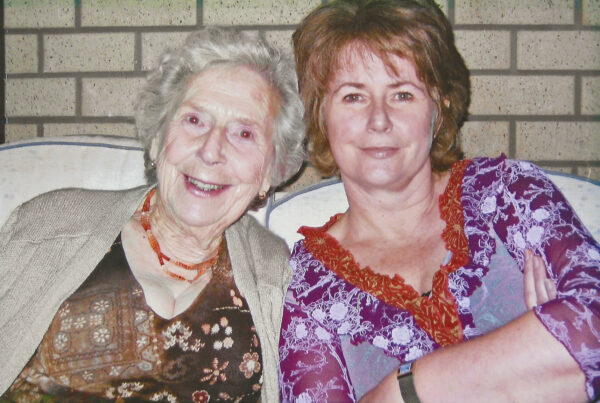
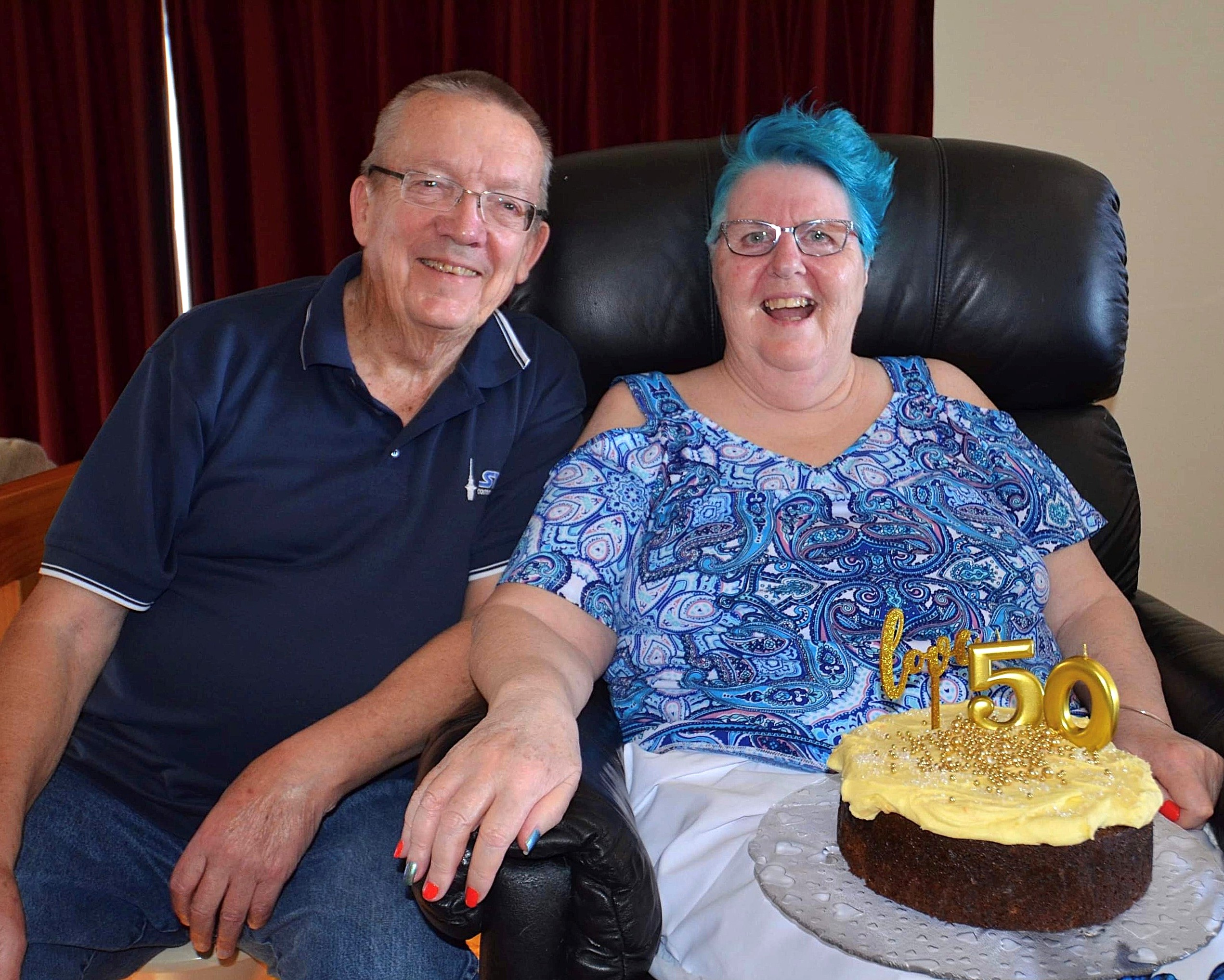
Lynn has been married to Roger for 52 happy years. Roger, she says with a laugh, is “almost too supportive now that I have this condition!”
“When you find yourself at a wall, that’s when you find out who’s there to really help you,” she says. It has certainly proven, she reflects, that she chose the right partner in life.
Together they raised five children and now have ten grandchildren, aged between two and 22. Family has always been at the centre of Lynn’s world.
Growing up, dinner was always together at the dining table. “It’s the little things like that, that I wonder if they had a bigger impact and made us all closer,” she says.
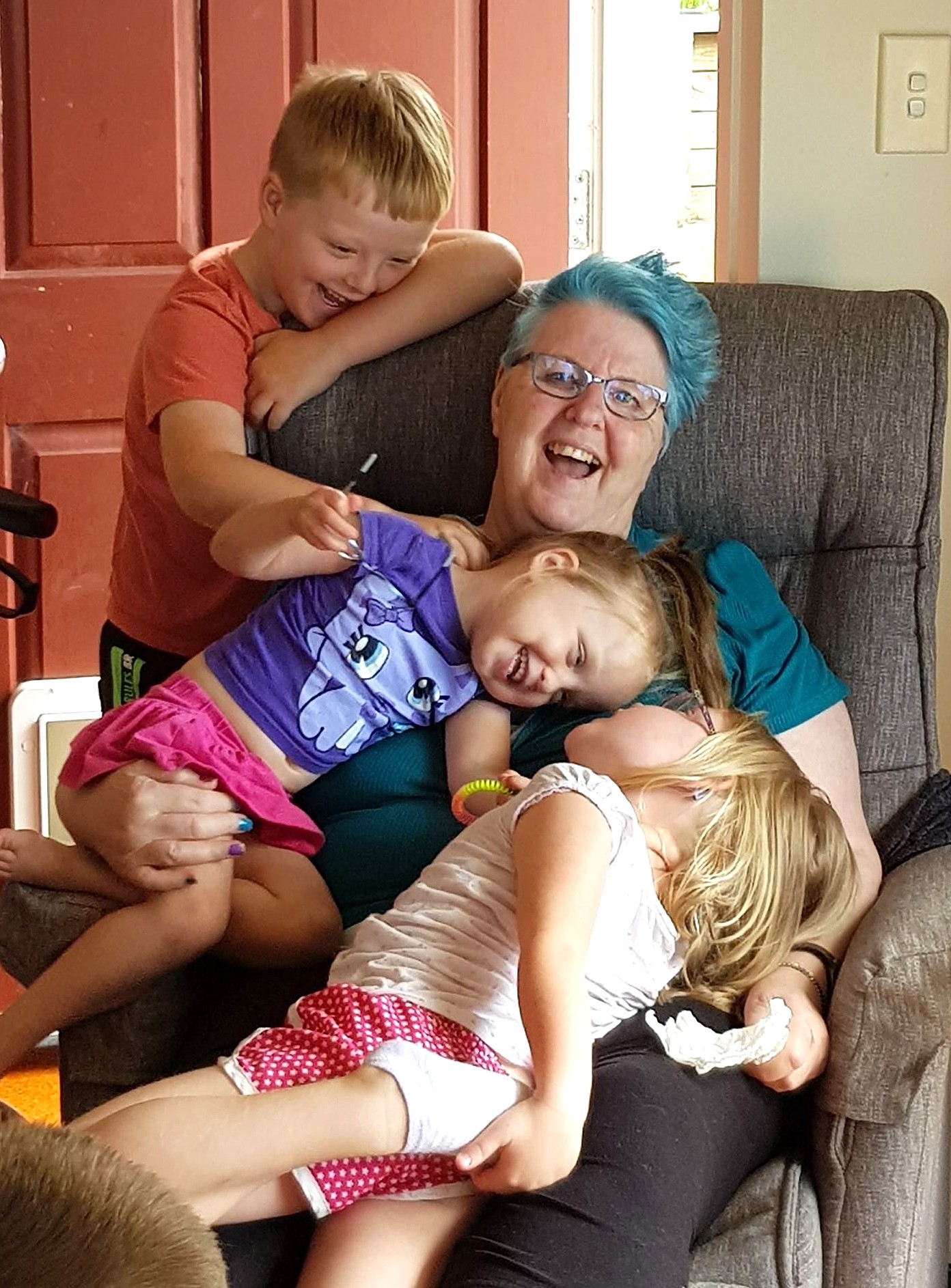
She and Roger created traditions that have flowed down through the generations. Each grandchild has received their first teddy bear from their grandparents. And on their first birthdays, they were each gifted a large hardcover book – such as nursery rhymes or Winnie the Pooh – to encourage the family ritual of bedtime stories.
Lynn loved being the organiser. Christmas Eve gatherings were her domain. She would plan the menu and delegate dishes, emphasizing the delicious food to be enjoyed together instead of presents. Chocolate-dipped strawberries from the local strawberry farm were always a favourite. “I loved cooking, entertaining and looking after others,” she says.
That identity of carer, organiser, doer, has made the progression of PLS especially difficult.
The slow loss of independence
PLS is a rare motor neurone disease that affects voluntary muscle control such as speaking, walking, swallowing, and breathing. It progresses slowly, and Lynn’s prognosis at diagnosis was around 15 years. But slow does not mean easy.
First came the walking stick, then the walker. Then an electric wheelchair for shopping trips that folded into the car. Eventually she needed a wheelchair full-time. Unfortunately, getting in and out of the car became harder, then impossible.
“Sadly that was the end of my shopping outings,” she says. She used to love going to the shops, to “fiddle and faddle around.”
“I used to wake up and say, I’m going to Hamilton to stay with my sisters, or I’m going to visit my friend who needs help. I loved looking after others. Now I loathe sitting in one place and not doing anything.”
For someone who never “put herself forward” or asked for help, the loss of independence has been one of the hardest adjustments. Even when Roger began taking on more at home, she felt guilty. She had always been the homemaker, the one running the house and family, and reversing those traditional roles didn’t come naturally to her.
Although Lynn is now restricted in how much she can physically help with her grandchildren, she is still involved as much as possible and loves to “share my view of the world with them.”
Finding connection at Hospice
Back in 2019, Hospice support began as home visits from one of the nursing team. “I loved the home visits from my Hospice nurse, she was a wonderful help,” Lynn says, recalling symptom management, reassurance and practical support right from the outset.
Next she began attending patient morning teas at Hospice House. “I’m a people person,” she smiles. At first she came with her walker. Later, in her wheelchair.
She joined in groups making dragonflies, and arts therapy groups. Sadly, the group activities had to take a break during Covid, although her Hospice nurse and doctor continued regular home visits. When the Kowhai Social Group began again post-Covid, Lynn didn’t hesitate to return.
“Life is so interesting, and I’m so lucky. I love people, meeting people and watching life.”
At the Kowhai group, she has also experienced the harder side of connection. “Last year the Kowhai Social Group was huge, the table was so full with people. Then every few weeks there would be one less person there, and that is hard to watch.”
Many of the others have advanced cancer with much shorter prognoses.
“I feel like I’m in a different category to the others… most of them have cancer and might have diagnoses of just a few months or maybe a year or two. I feel different, like should I even be there? And then I wonder if we even deserve Hospice, because asking for help is quite foreign for us, so I feel slightly guilty.”
It’s a common misconception that Hospice only cares for people with cancer, and one Lynn now corrects whenever she can. “I tell people all the time about Hospice, because most people don’t understand what it provides.”
Living life to the fullest
Over the years, Lynn has accessed a whole range of services from Hospice, including counselling, massage therapy, arts therapy and physiotherapy. The ability to contact Hospice’s doctor at any time, as well as the 24/7 Afterhours Advisory team, has given Lynn and Roger great peace of mind that help is always just a call away.
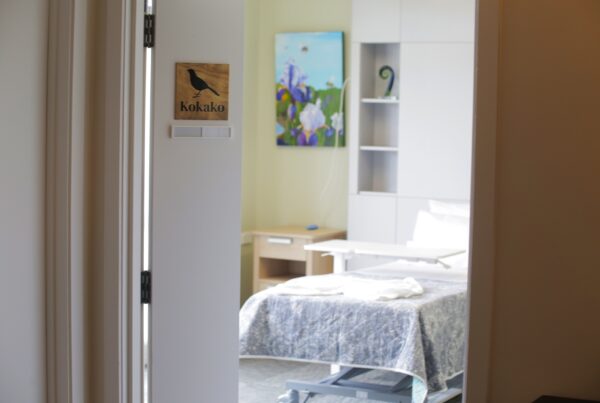
Now, respite care at the He Whare Korowai – Home From Home facility at Hospice House has meant that her husband can have a proper rest, knowing she is cared for 24/7 by a familiar, experienced Hospice team.
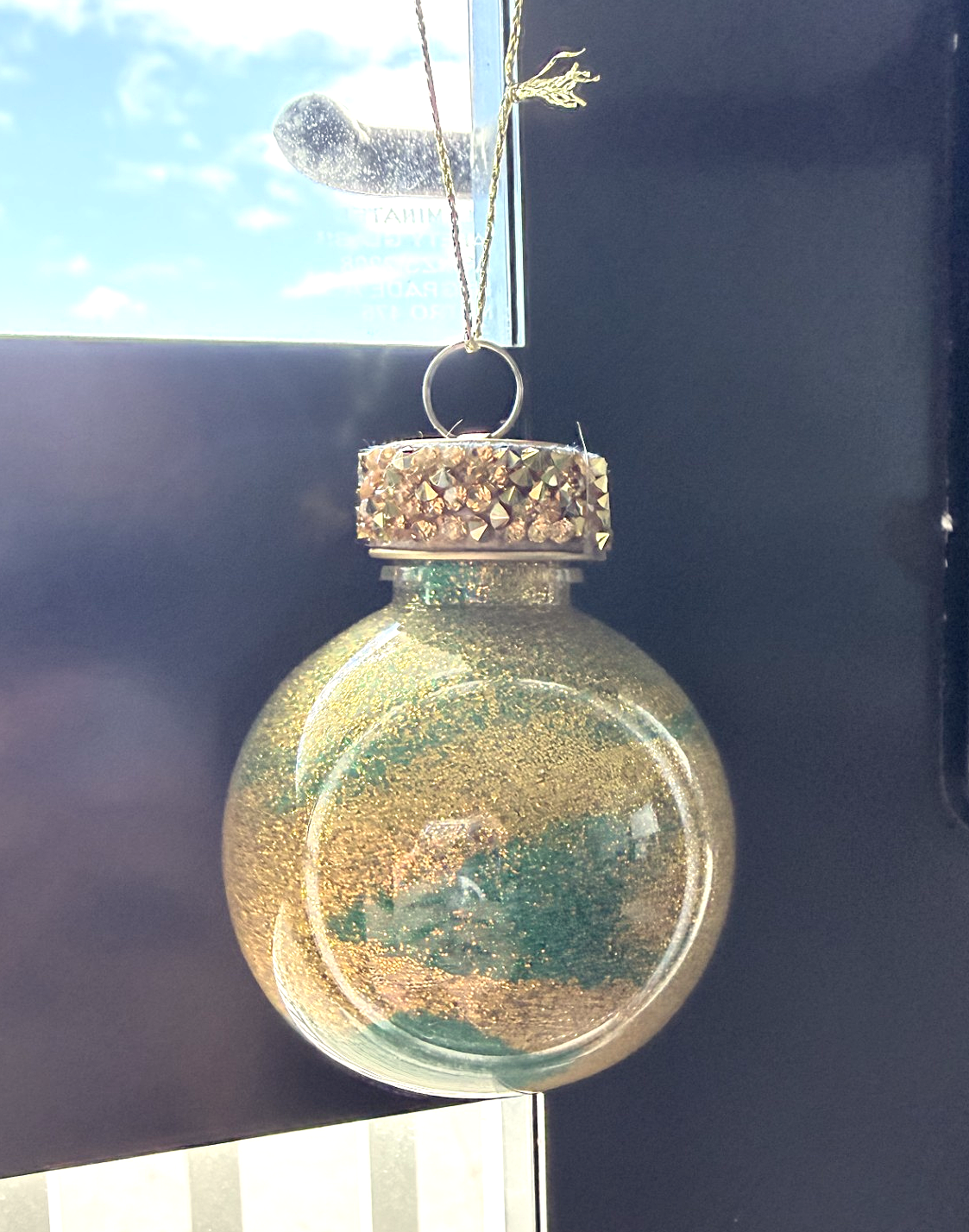
And Lynn makes the most of every moment. Cheeky and quick-witted, with a wicked sense of humour, she keeps staff on their toes. During a respite stay in December, when things were quiet, she asked the team to turn up the Christmas music so she could have a little boogie in her chair. And true to her incredibly generous and giving nature, she gifted all of the staff beautiful, handmade Christmas baubles.
Lynn says family togetherness was her role in life, and she feels content that she has done that job well. Now she continues to live with connection, courage and determination, with Hospice support at every stage. “Hospice is for me and Roger and also my whānau, which I find very soothing and important,” she smiles.