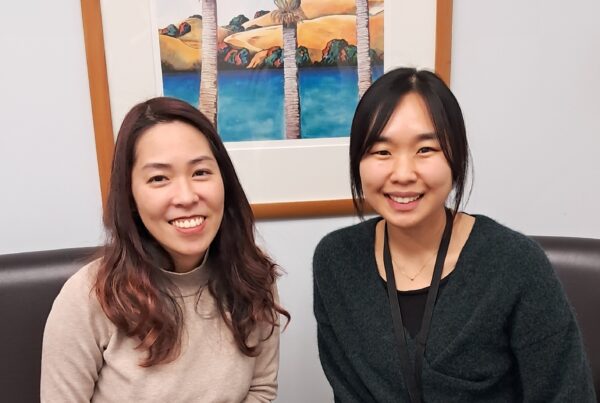
Community pharmacist Jing joined Hospice West Auckland has just completed a one-year part-time placement to deepen her understanding of palliative care. “I was really surprised by how truly interdisciplinary the team is,” she says. “I didn’t realise how much social workers, spiritual advisors, cultural workers and clinicians all contribute to a person’s wellbeing. It’s not just about symptom control – it’s about their family, their home life, their beliefs, their culture. I didn’t appreciate how important that was until I saw it in practice.”
Working within the Poi team
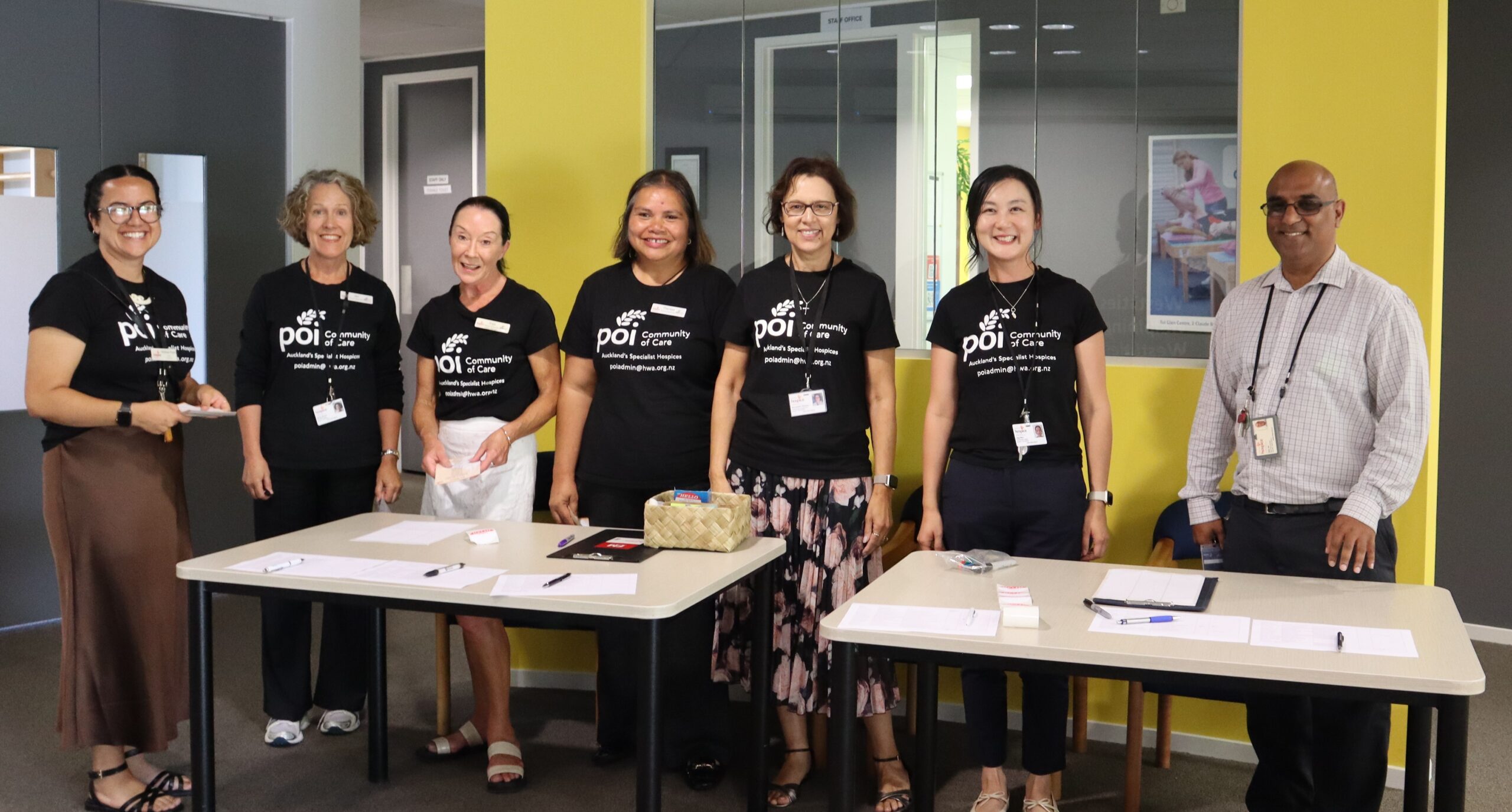
Jing spent her year in the Poi (Palliative Outcomes Initiative) team, as well as working alongside Hospice’s doctors, nurse specialists, social workers, physiotherapists, cultural liaisons and other clinicians. The collaboration, she says, was one of the greatest benefits of the placement.
“In the Poi team, you’re never working alone. You’re constantly discussing cases, adjusting care plans, and learning from everyone around you,” she explains. “In community pharmacy, you’re often writing a medicine review by yourself. Here, I could glance over and hear a physio’s perspective, or a nurse’s insight, and adjust my approach. That kind of real-time learning is invaluable.”
These experiences have transformed how she thinks about treatment decisions, particularly deprescribing and focusing on what truly matters for quality of life. “I realised that some medicines people come out of hospital with might not actually be relevant anymore. Sometimes the side effects outweigh the benefit. Hospice has a completely different perspective: what will help this person live as comfortably as possible now?”
New cultural insights
As a Chinese New Zealander, Jing also gained new understanding about cultural perspectives on death and dying – insights she says will shape her practice moving forward. “In many Asian communities, death is taboo. People don’t want to talk about advance care planning. Seeing how our team gently approaches those conversations has taught me so much. Now, when I’m with patients in the community, I know to be careful, to be respectful, and still help them access the information they need.”
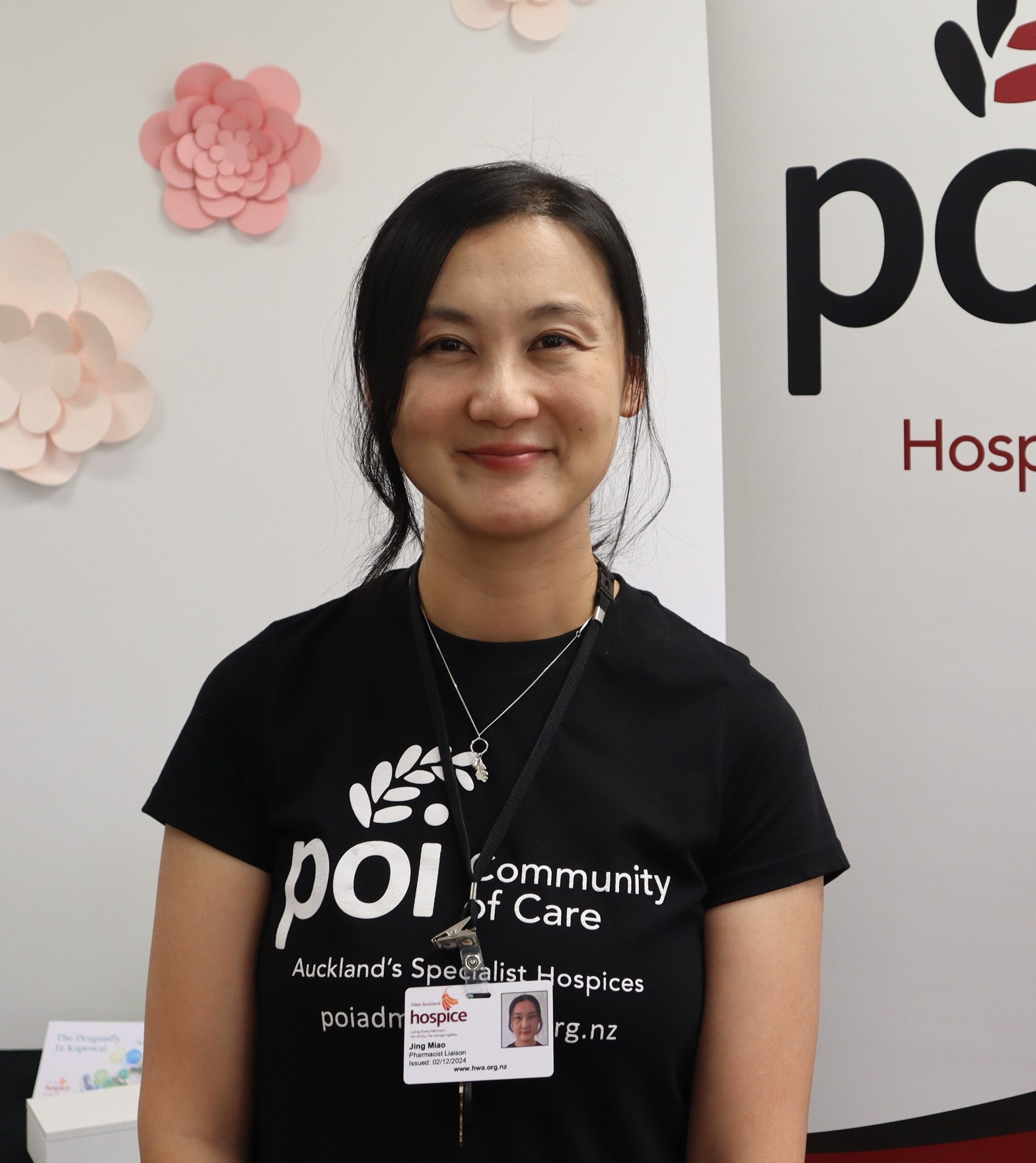
Learning beyond medicines
One of Jing’s most surprising learnings was discovering the breadth of non-pharmacological support available. “I never realised how much a physiotherapist, for example, could change someone’s quality of life, at end of life,” she says. “Or how many community supports exist that I just wasn’t aware of before. Working with Poi opened my eyes to all the services out there that can help someone live well.”
Moving forward
As Jing reflects on her year, gratitude is the word that comes to mind. “I’ve been really appreciative to learn the amount of work that goes on behind the scenes here – the compassion, the dedication, the teamwork. Until you’re part of it, you don’t realise how much Hospice does. It’s reassuring to know people are looked after so well.”
Although her placement has ended, Jing will stay connected as a casual pharmacist when needed. She is now returning to the community pharmacy she co-owns with her husband with new insight and purpose. “Knowing what I know now, I want to be able to provide better support to people in the community. This year has changed how I’ll practise.” Her time with Hospice has strengthened not only her professional skillset but her understanding of what it means to care for the whole person. And that, she says, is something she’ll carry with her for the rest of her career.