
Beverley first combined her nursing experience with a passion for volunteering in the 1980s, volunteering with the Cancer Society’s patient support groups. She had watched her father battle inoperable lung cancer several years earlier, and was struck by how inadequate the hospital system was at supporting people with terminal illnesses. In Auckland, the establishment of regional hospices had already begun with Mercy Hospice’s establishment in 1979 followed by the South Auckland Hospice offering palliative care beds in the Elmwood Rest Home in Manurewa in 1982. Inspired to create a similar service locally, Beverley and fellow Cancer Society volunteer Anne Sinclair began discussing the need for hospice care in West Auckland. Their goal was to provide holistic care for those with life-limiting illnesses in a hospice homecare arrangement that wouldn’t compete with local doctors. “We wanted it to be community holistic involvement,” says Beverley.
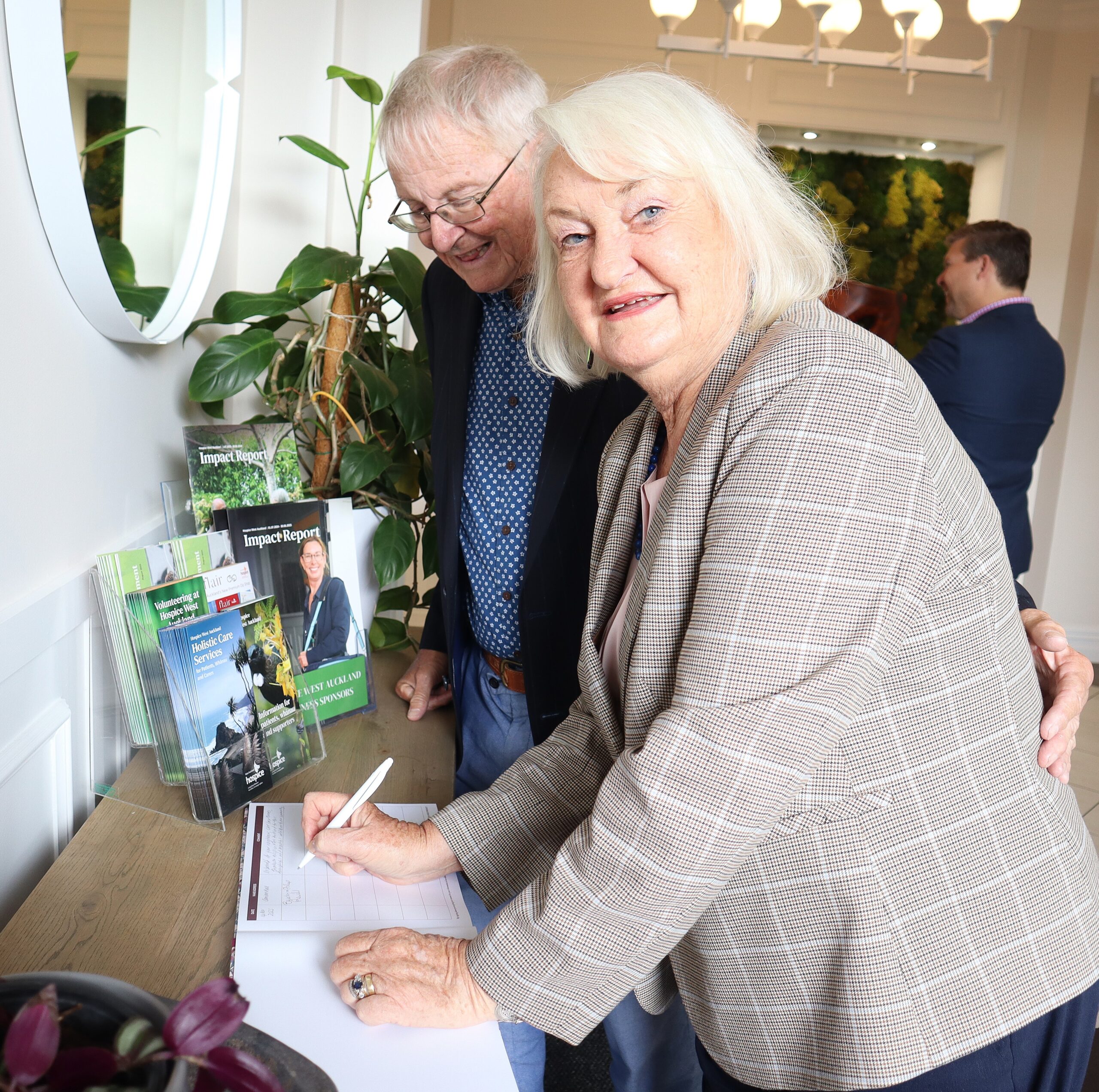
Beverley and Philip Revell signing the Visitors’ Book at the opening of He Whare Korowai – Home From Home in November 2025.
When a steering committee was formed with Peter and Anne Sinclair, Gloria Horn and Beverley, their initial meetings involved discussions about what patients really wanted, what family support was needed, and learnings from the Cancer Society – which was actively encouraging and advising. “We talked a lot about how to provide what people and their families at home needed – we were very focused on homecare,” Beverley says.
The next step was the establishment of a charitable trust by Beverley’s husband Philip. “We wanted trustees who would be active, not just have their name on the trust,” Beverley explains. “They had to be people in our community which stretched from Waterview all the way up to Helensville, so we approached people we knew in each borough.”
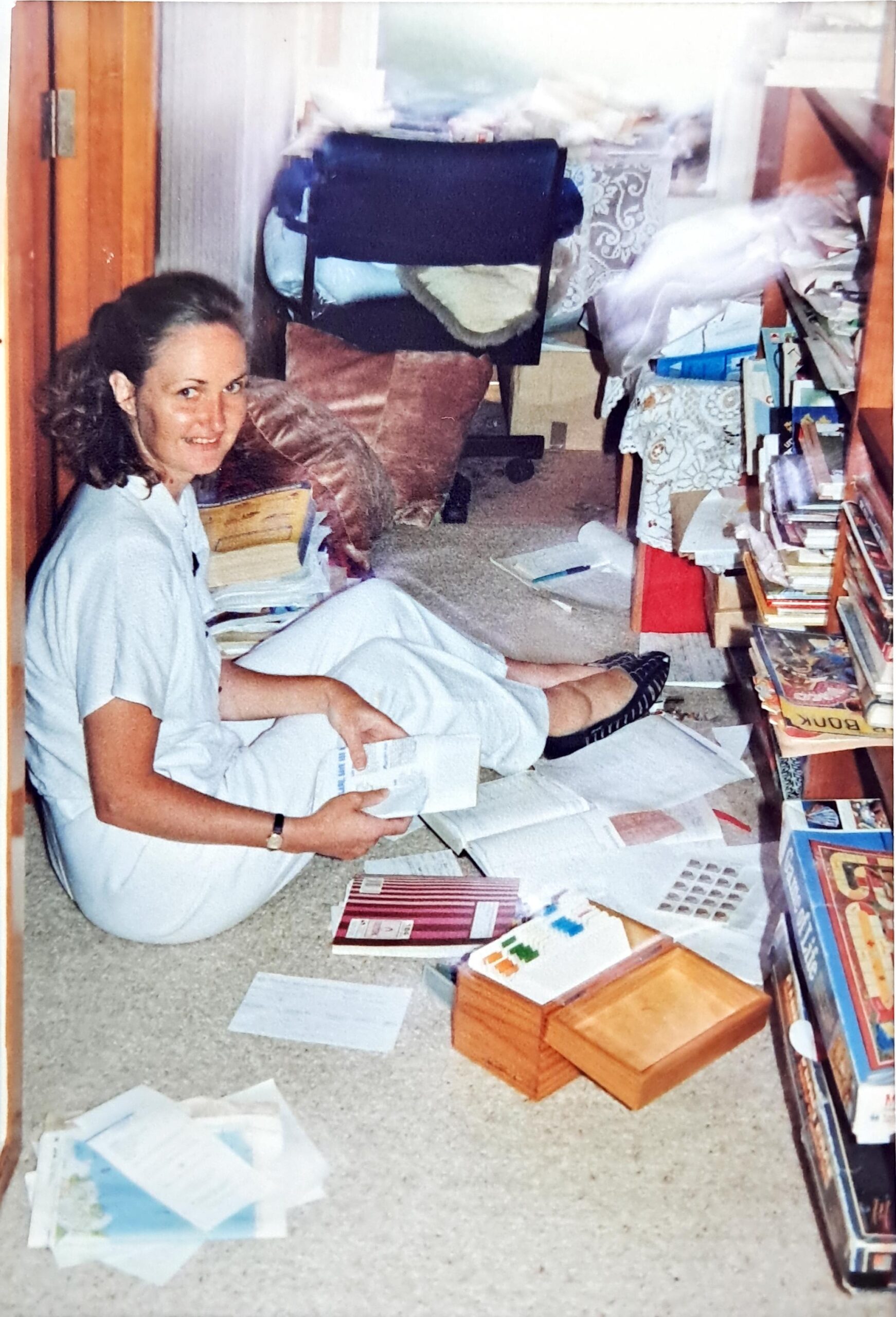
Beverley’s Nurse Coordinator office in the hallway of her home.
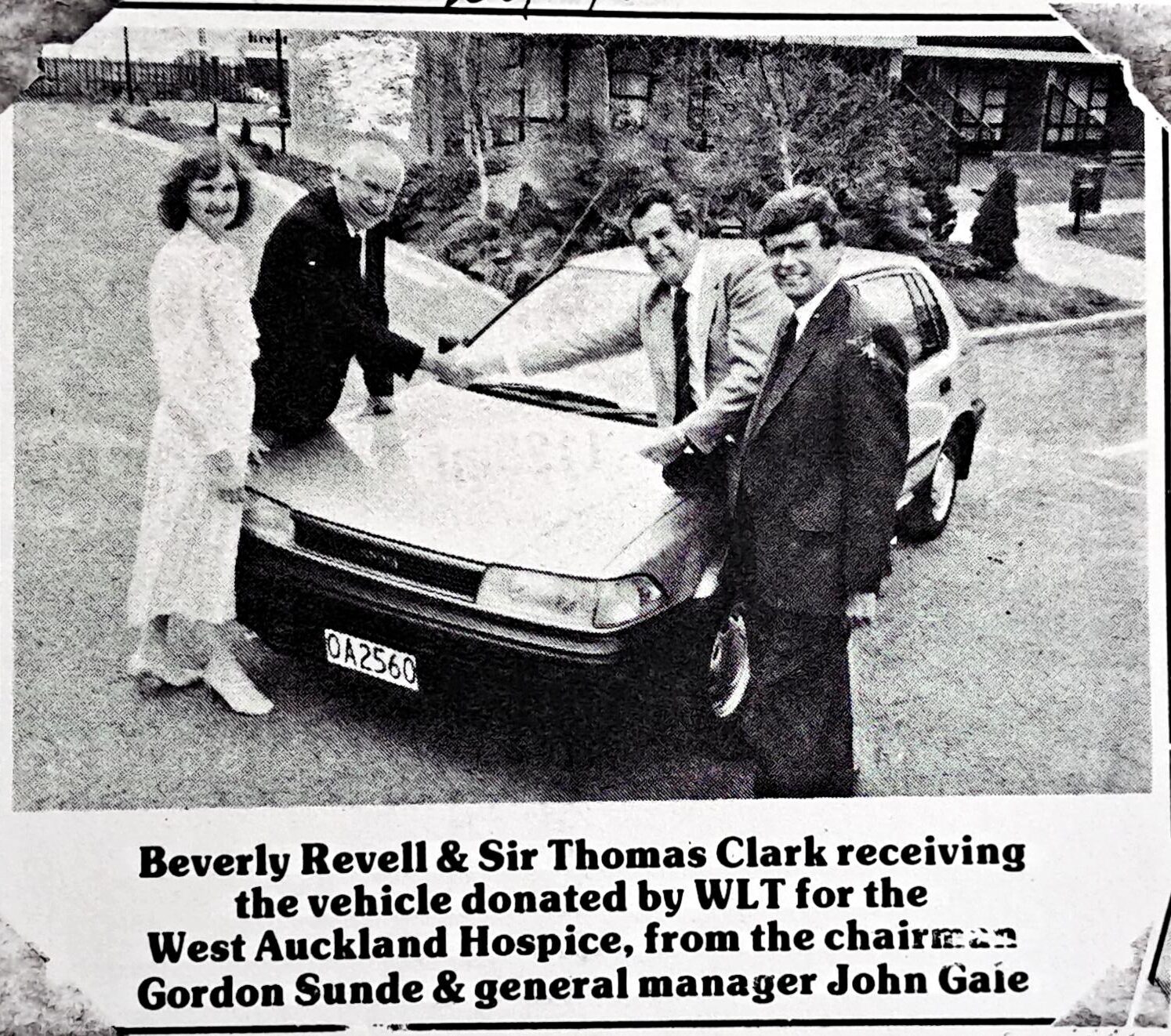
With some of the most influential individuals in West Auckland as founding trustees (Maureen Brooker, Sir Tom Clark, Dr Ritchie Gilmour, Lois Holmes, Dianne Paton, Peter Sinclair, Victor Sunde and Philip Revell), West Auckland Hospice HomeCare, as it was originally known, began to take shape. “From the hallway of our home in Hobsonville Road, we set up an office with a child’s table and chair, answerphone and a Henderson landline phone number,” says Beverley. “Pamphlets and stationery were printed by Henry Norcross Printing, and I visited every GP in West Auckland delivering those pamphlets. We were all committed to a holistic homecare setting, run with volunteers.”
Although they encouraged self-referrals, Beverley knew they needed to connect with the region’s GPs to raise awareness, build trust, and encourage referrals, with trustee Dr Ritchie Gilmour playing a key role in fostering these connections. As well as delivering pamphlets, the team invited the GPs to come and meet the trustees one evening and hear what they were planning to do. “We had to let them know what we were doing and how we were going to do it,” Beverley says.
“We found that they wanted to be involved in palliative care but didn’t have enough information on what do to, how to do it, and how to manage it. So we saw our role as teaching them about pain and symptom management, the medications, and how we could support their patients.” They made a series of videos offering advice on pain and symptom management techniques and held education evenings.
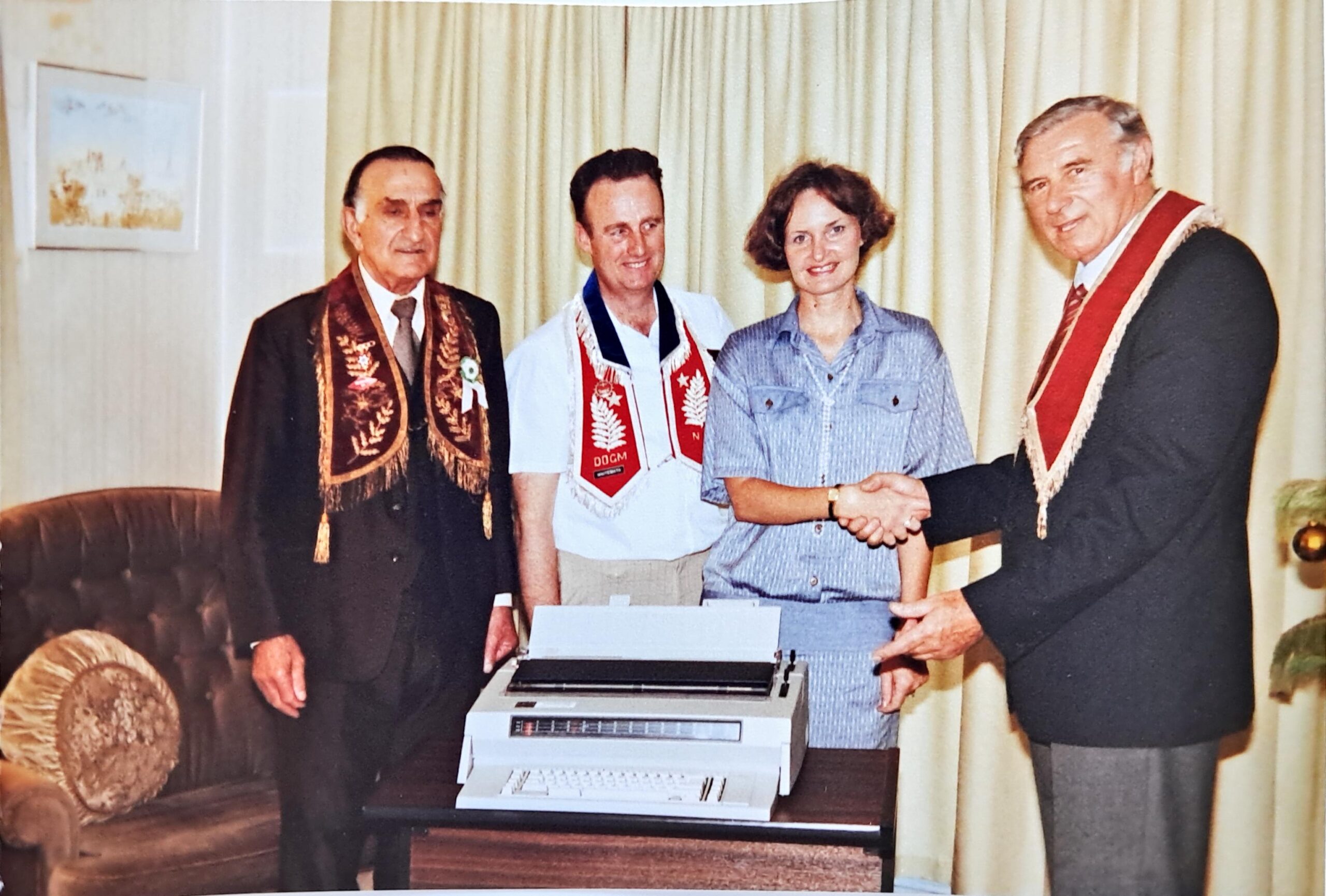
The Independent Order of Goodfellows presented a typewriter to Beverley.
The committee agreed that Hospice wasn’t going to be just for people with cancer, but for anyone with a terminal illness. “Our first referral came from a GP and it was a four-year-old child with a genetic problem,” says Beverley. “A nurse from the hospital came on board as a volunteer and she would spend her days off helping that family, giving them relief. It was terribly sad.”
In 1988 the Henderson Borough Council donated a house to Hospice, which was relocated onto land at Woodford Avenue. The Henderson Rotary Club rallied the community to fundraise for the much-needed renovations, with key West Auckland businesses donating products and services, as well as establishing the beautiful gardens. Having an official Hospice House meant that the volunteer team could now offer day stay services alongside homecare relief, night nursing, education and seminars.
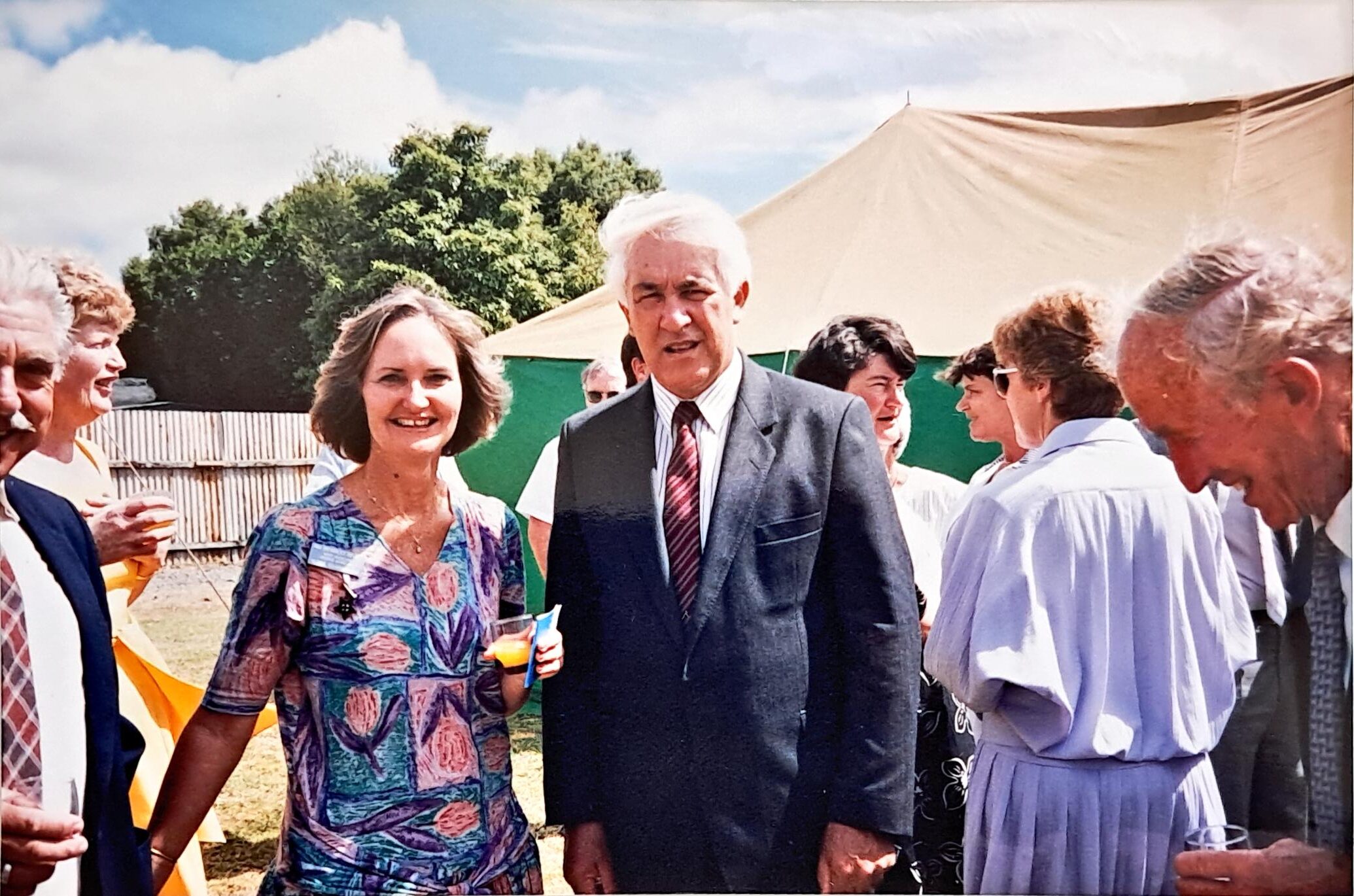
Beverley with Sir Paul Reeves at the official opening of Hospice House at Woodford Ave.
“We had drivers who would pick people up and bring them to day stay on Wednesdays,” says Beverly. “There’d be morning teas and lunches, and we’d take them out on trips. We’d go to see the America’s Cup and wave our red socks and wave at the chaps. We’d go to the domain or visit South Auckland Hospice. And we used to go around Western Springs and take them for a little picnic to help out their parents or families. Wednesday was the day that gave everyone a break and we provided fun for the patients who came in.”
Patients were also able to visit the Hospice House on other weekdays and have a rest or sleep in the patient bed that was complete with a beautiful donated quilt. The bathroom was equipped with accessibility aids so patients could shower easily.
Beverley recalls they had a multitude of La-z-boys, all of which were donated by organisations or purchased with donated money. “The house was dotted with soft pinks, pinky blues and greys!” she laughs. “And all of the crockery was donated by Crown Lynn – it would be worth a fortune now!”
Baking and meals were also provided to families as part of homecare. Volunteers baked and cooked meals for the nurses to take into homes to help ease the burden. “It helped a lot in homes that were stressed with having lots of family to provide for,” explains Beverley. “It also brought in volunteers who didn’t want to have patient contact but still wanted to contribute. Some baking was used for day stay and the rest was given out to families.” As well as picking up patients, volunteer drivers were also invaluable for dispersing equipment.
“We provided night care, taking emergency calls in the middle of the night,” says Beverley. “A number of times Philip would wake up and find I’d gone. I’d leave a note on the kitchen bench saying where I’d gone with the phone number and he’d get the kids fed and off to school. And that’s how we managed – I couldn’t have done it without the family’s support.”
Fundraising support came a myriad of local businesses, trusts and from every group, including the Country Women’s Institute, League of Mothers, Rotary, Lions and the Masonic Lodge. “The whole thing was who you knew, what you knew, how you did it, and we drew all these people in!” says Beverley. Even each of the borough’s mayors were tapped on the shoulder and they all gave and participated in some way.
One of the challenges Beverley faced was over the concept of Hospice being homecare in the community, rather than a building. In 1989 she and Philip went overseas and Beverley spent time at St Christopher’s Hospice in London with Dame Cicely Saunders, who set up the Hospice movement. “I saw their inpatient unit, and even then I couldn’t believe that back home we were doing homecare – it was a foreign concept to them,” she explains. “Dame Cicely had set up an inpatient unit to show people that you could treat someone with cancer in a different way: you could keep them pain free by using medication differently. That’s where the concept of Hospice being ‘beds in a building’ came from. Whereas I would always say that Hospice is in the community and flip it around to help people to stay at home.”
This was especially important when it came to garnering funding. “I used to argue and say we do have beds – we fund them in the community!” says Beverley. “We had a bed at West Harbour Gardens Hospital that we funded for our use, and we had a relationship with Kennedy House too. In both cases we would go in and make sure they had respite care, oversee their medications, and work with their GP on pain management. So I’d argue that we had beds in a different way, but for years we were vilified that we didn’t have “proper beds”. It was a mindset that Hospice was one place that we had to change to Hospice being in the community – palliative care is everywhere.”
Beverley recalls one particular meeting with the Regional Health Authority. “He said to me: the trouble is Beverley, you’re a Rolls Royce services and we can’t afford a Rolls Royce. I told him if he gave me the money for one Rolls Royce, I’ll buy 50 Toyotas and give them a Rolls Royce service. He hadn’t thought of that!”
The Hospice team used some of their funding to implement a system where GPs looking after their own palliative care patients would be paid for making afterhours call outs. “We wanted to make sure they were rewarded, because they were doing afterhours care without being paid or any extra funding, so we set that up,” says Beverley.
As Hospice grew, Beverley’s role became increasingly administrative, with fundraising applications being a large but necessary part of it. When the first paid fundraiser was hired, Hospice branched into public events, holding garden parties, garden tours and charity golf tournaments, and participating in Christmas parades. “We held a Queen Victoria Garden Party in one of our supporters’ lovely homes in Helensville,” remembers Beverley. “We dressed up in old swimming gear and Victorian garb, and our host dressed up as Queen Victoria.”
The beautiful gardens at Hospice House became part of the renown garden tours that included stunning gardens in Riverhead, Coatesville, Helensville and Oratia. “Not only did we hold garden parties but we also held weddings,” says Beverley. “We’d open up the gardens for wedding photos in return for a donation. It was a multi-purpose Hospice!”
The nursing team gradually expanded with other volunteer RNs and retired nurses joining the organisation. It wasn’t until 2001, when West Auckland Hospice had a team of five nurses, that a government contract was awarded to provide for paid positions. “It was a basic pay higher than district nurses, because it was a package that included cars, plus we paid for all their education and to attend conferences,” says Beverley.
The holistic care services expanded to include bereavement care and bereavement services, which were for loved ones of anyone who had passed in the community. Massage therapy was also offered. “We got a massage table for patients, but we also provided massages to our nurses every Friday to help them to de-stress. Every month we’d have a lunch at Hospice House for the nurses too.”
Beverly is proud that Hospice West Auckland was one of the first Hospices to push education, offering regular education sessions, resource videos, and regular meetings as well as being involved in an education arm at Auckland University. “We had social workers and doctors on secondment who would go out into the community with our nurses and it opened their eyes about patients at home and their families so that was great,” says Beverley.
After fifteen years of being the driving force behind Hospice West Auckland, Beverley stepped down in 2001. Her legacy continues today in the comfort, care and dignity we provide to our patients and support their families.