
When Dr Peter Woolford began practicing as a GP in Auckland in 1986, it wasn’t convenience that brought him to West Auckland, it was conviction. “I chose West Auckland because it was the most under-doctored area in the city,” he says simply.
At the time, West Auckland was dramatically underserved and under-resourced. With just five GPs in New Lynn, that suburb was an easy choice for Peter, and he continued practicing there for almost four decades. During that time he was instrumental in shaping palliative care in the West: caring for families in their homes, influencing national policy, educating generations of doctors, and closely supporting Hospice West Auckland from its earliest days.
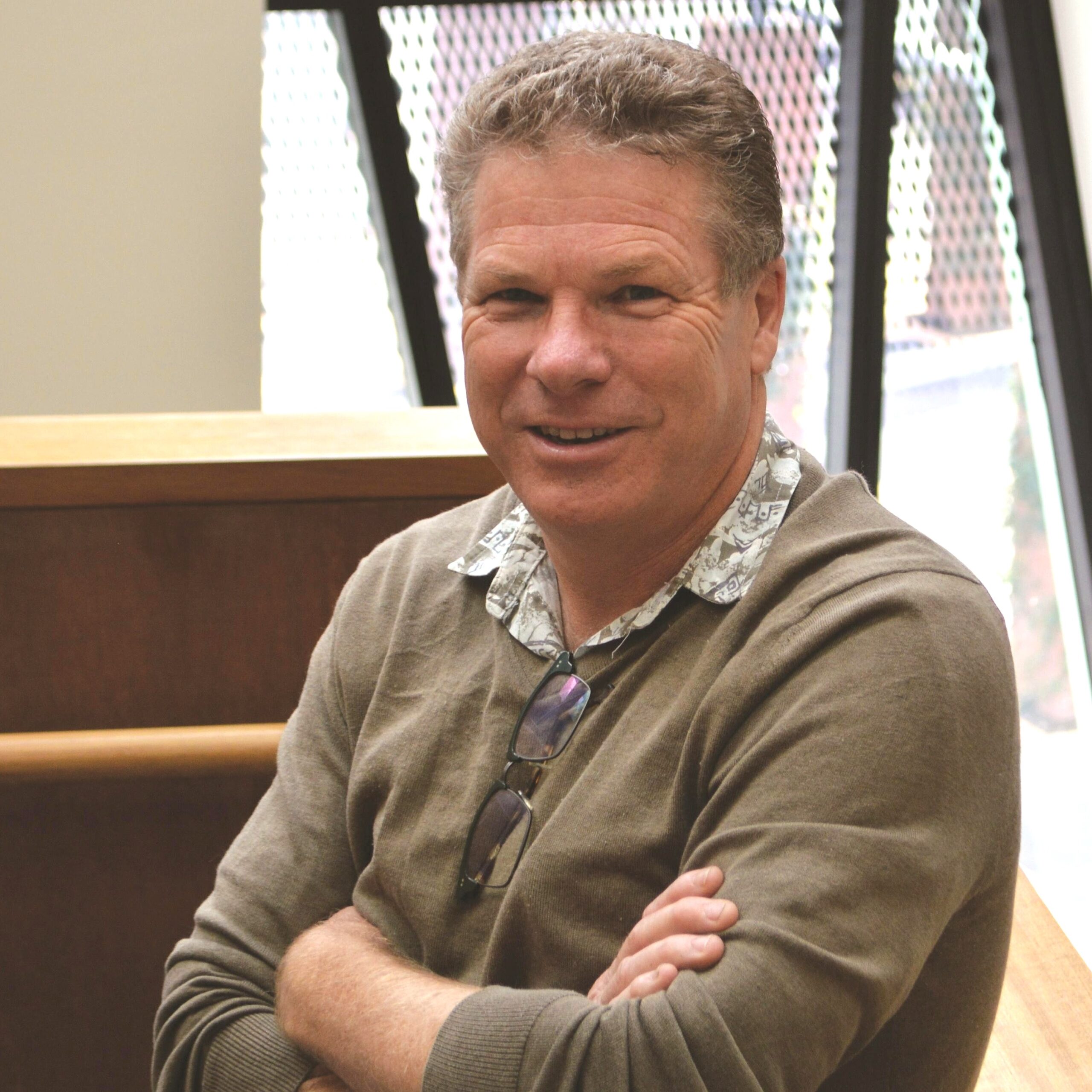
During Peter’s first year in general practice, 11 of his patients died. For a GP, that was confronting, and also formative. “Now that’s a lot for a GP, so I thought I should probably learn a bit more about palliative care, and I became very interested in it.”
At the time, medical training offered no formal education in palliative care. “We were doctors and we were going to save everybody’s lives,” he smiles. “It’s about healing, it’s not about walking life’s journey.”
But the reality of home visits, pain that couldn’t be ignored, and families struggling without adequate support reshaped Peter’s practice and philosophy. Long before syringe drivers (pain pumps), specialist teams, or funded community services, Peter was providing end-of-life care where his patients wanted to be: at home. “There were only two options – hospital or home. And what I learned very early was that most people wanted to die at home, surrounded by family.”
Peter discovered that he and Beverley Revell, Hospice West Auckland’s founder, shared the same philosophy. “We got on really well, we were completely on the same page. We would talk a lot about home care, which was our thing: supporting people at home.”
Peter became a fierce advocate for home-based palliative care, and complex cases were often referred to him. “If someone needed subcutaneous medication, I or my Practice Nurse would visit three or four times a day. We trained families to give injections. They all stood up and played their part, and it gave them strength.”
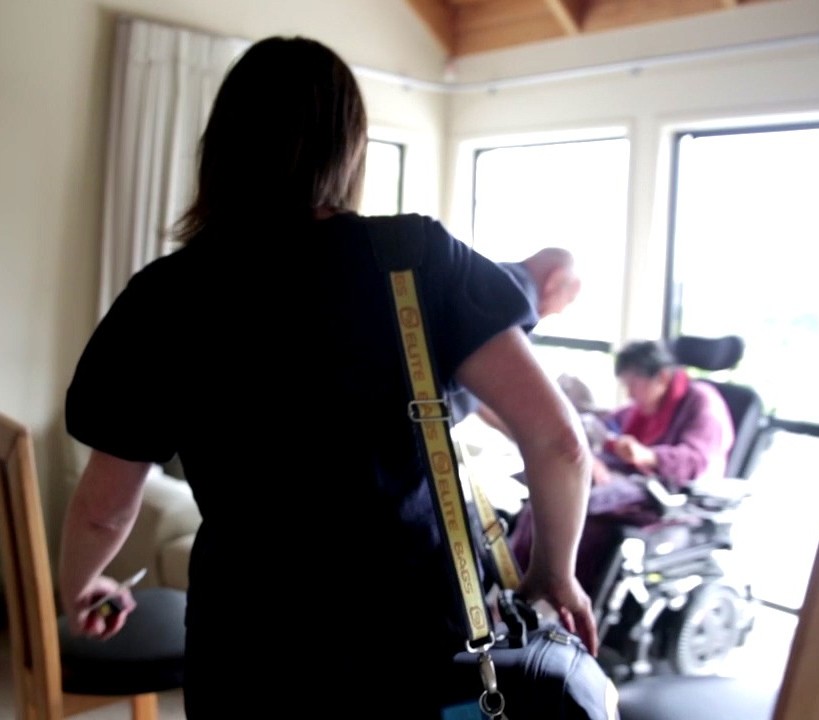
What Peter witnessed repeatedly was transformation, not only for patients, but for families. “Families would say it was the toughest thing they’d ever done, but also the best thing. It would change them, fundamentally, for the better.” Peter shared these insights on palliative care at home widely with his colleagues. In an article for The New Zealand Family Physician, he wrote: ‘By maintaining the patient in their home, relatives and friends, particularly the younger people, learn that death is not something to be hidden away in hospital; that their feelings are also not to be hidden away or to be frightened of; nor is death catastrophically overwhelming as it is so often portrayed.’
Peter’s commitment extended beyond individual patients. Although he was never formally employed by Hospice West Auckland, his contribution was pivotal from the very beginning. He played an essential role in raising awareness of Hospice care and breaking down professional barriers. “One of the other things that we were doing at that time with Bev was education, so upskilling other GPs as well. There would be regular meetings for medical education, and I was always pushing palliative medicine, pushing access to Hospice and the Hospice Nurses, and getting people to understand what marvellous services they provided.”
Beverley, Peter and the other Hospice West Auckland founders always envisioned the service as being rooted in community with patient-centred values. “It was never about having a hospital-like base; that’s why it was originally called ‘West Auckland Hospice HomeCare.’ People loved coming to day-stay at Hospice House in Woodford Ave, and it gave the families a break for the day… but the core vision was always supporting people at home.”
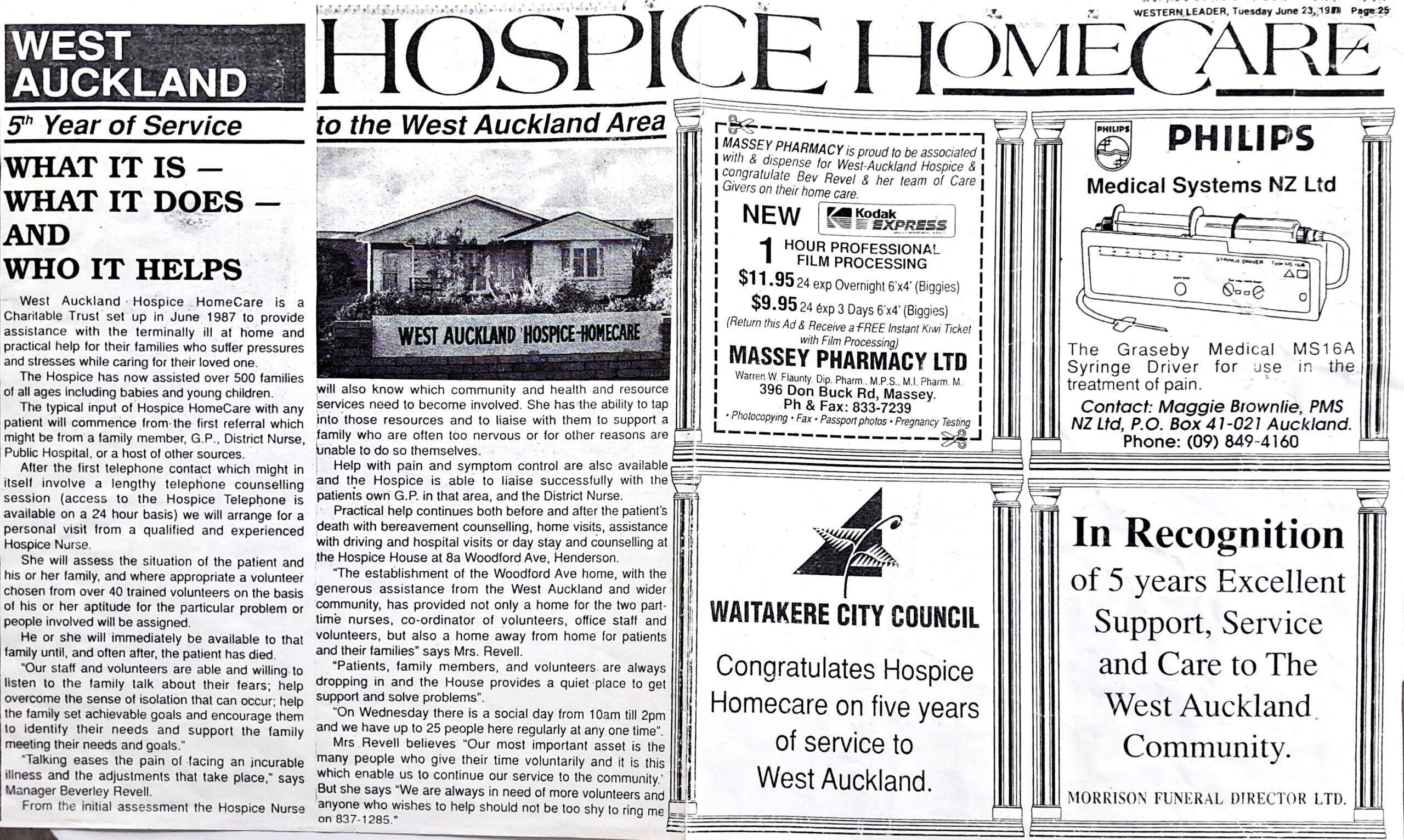
In facilitating understanding among his fellow West Auckland GPs, Dr Woolford acted as a champion and liaison, advocating for best practices and collaborative care. “Part of my role was bringing all the GPs together. We established a good basis to pull people in and get them working with Hospice.”
Through education, outreach, and example, he showed the medical community the benefits of working with Hospice: “Hospice Nurses and Specialists are there beside us, not to take over, but to help us give our patients the best possible end-of-life care.” He supported GPs in remaining central to palliative care, helping to embed home-based care as a preferred and compassionate choice.
Dr Peter’s influence extended well beyond West Auckland. He became the College of GPs’ representative for palliative medicine, contributing to early national efforts to create a coordinated, equitable palliative care system across Aotearoa. He was involved in foundational policy work, long before palliative medicine was recognised as a specialty. He helped establish postgraduate diplomas in palliative medicine and completed a master’s degree in palliative care. Unsurprisingly, the topic of his thesis focused on understanding the role that GPs play in palliative care, particularly in relation to patients dying at home.
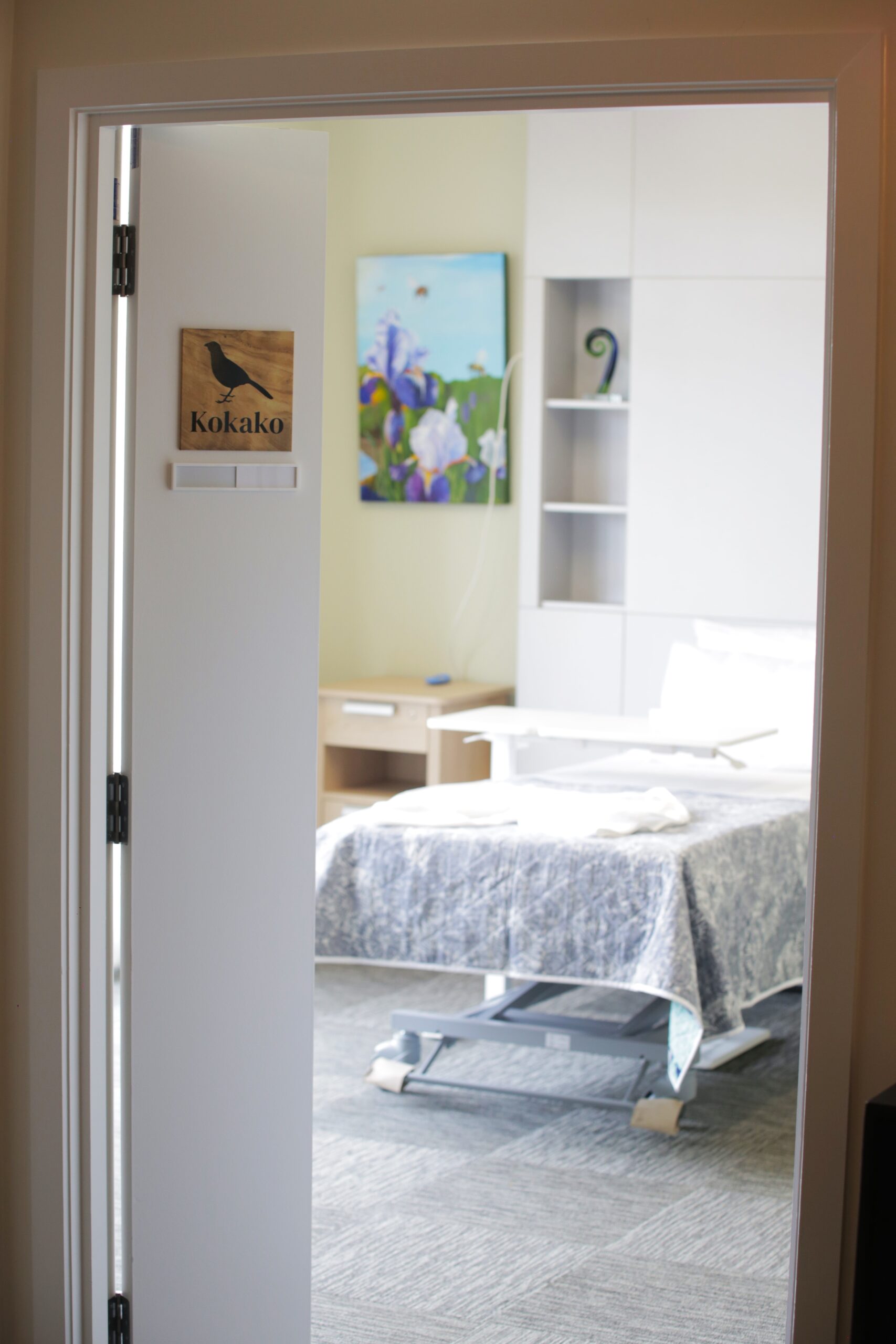
In recent years, Peter has watched Hospice West Auckland evolve, including the opening of He Whare Korowai – Home From Home, a space that reflects the original vision he shared with Bev decades earlier. “When Celia showed me around, I was delighted. This is exactly what Bev wanted: beds that feel like home, not hospital.”
Peter speaks warmly of Dr Celia Palmer, Hospice West Auckland’s Clinical Director, describing her as “a beacon” – a leader who understands both general practice and specialist care. “She knows that palliative medicine specialists should support GPs, not replace them. That balance is critical.”
Now retired, Peter still hears from former patients and families. They send photos, updates, and occasionally still ask for advice. “It was never a one-way street,” he smiles. “I got a lot out of it, it made me the person I am. I was only ever doing what I’d want for myself – to be at home, with family, supported to die well.”
Four decades later, Dr Peter Woolford’s influence is evident in the way palliative care is practised – in homes where families are supported, in GPs who feel confident walking alongside dying patients, and in a Hospice service built on partnership and respect for what matters most to each person.